20FT vs. 40FT containers
Compare the footprint, volume and typical use before choosing an exact unit.
20FT standard
- Exterior
- 20′ × 8′ × 8′6″
- Volume
- ≈ 1,170 cu. ft.
- Delivery space
- Plan for ≈ 70 ft.
- Best suited to
- Tools, dense goods and tighter sites
40FT high cube
- Exterior
- 40′ × 8′ × 9′6″
- Volume
- ≈ 2,690 cu. ft.
- Delivery space
- Plan for ≈ 110 ft.
- Best suited to
- Bulky goods, racking and modifications
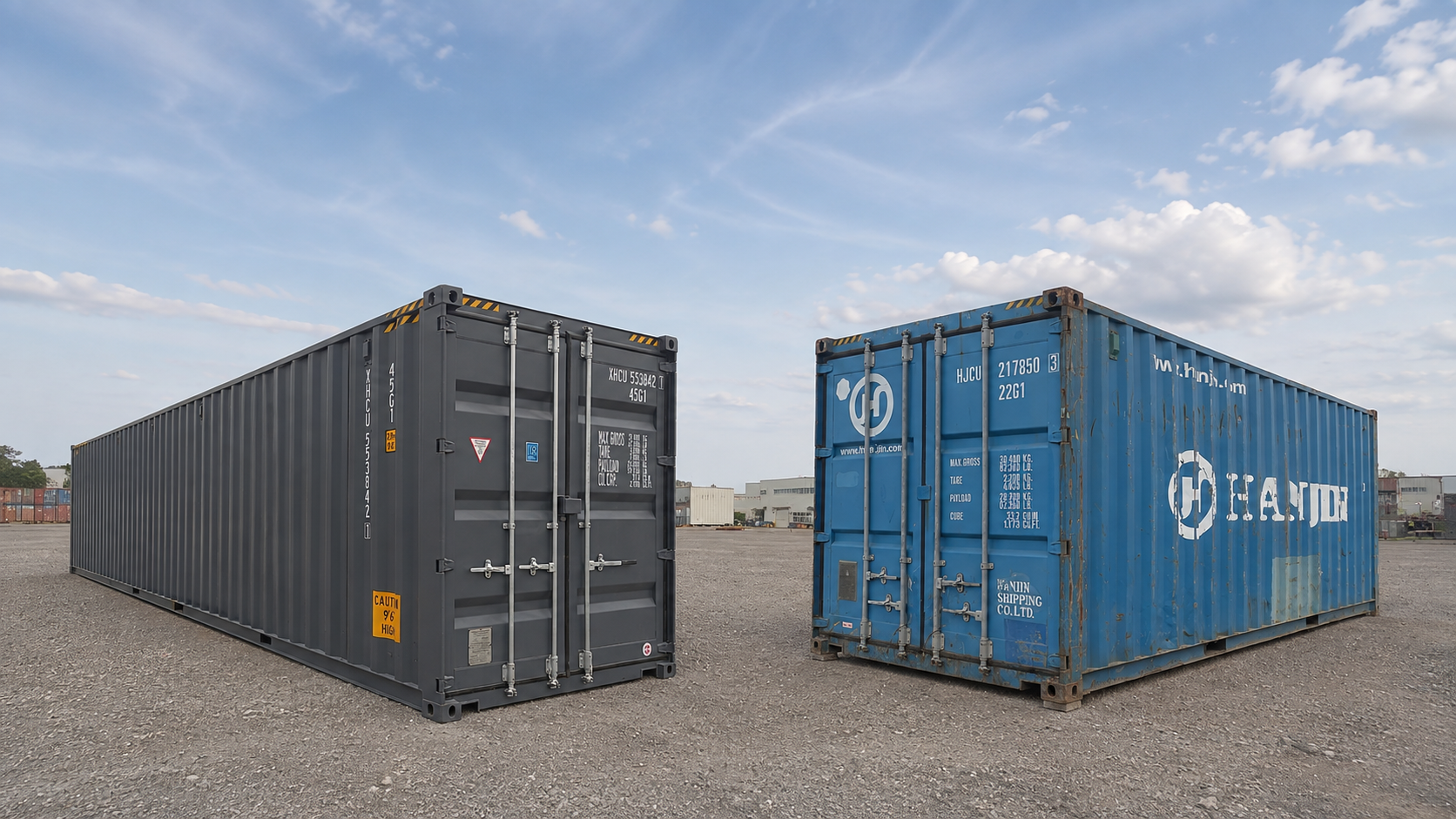
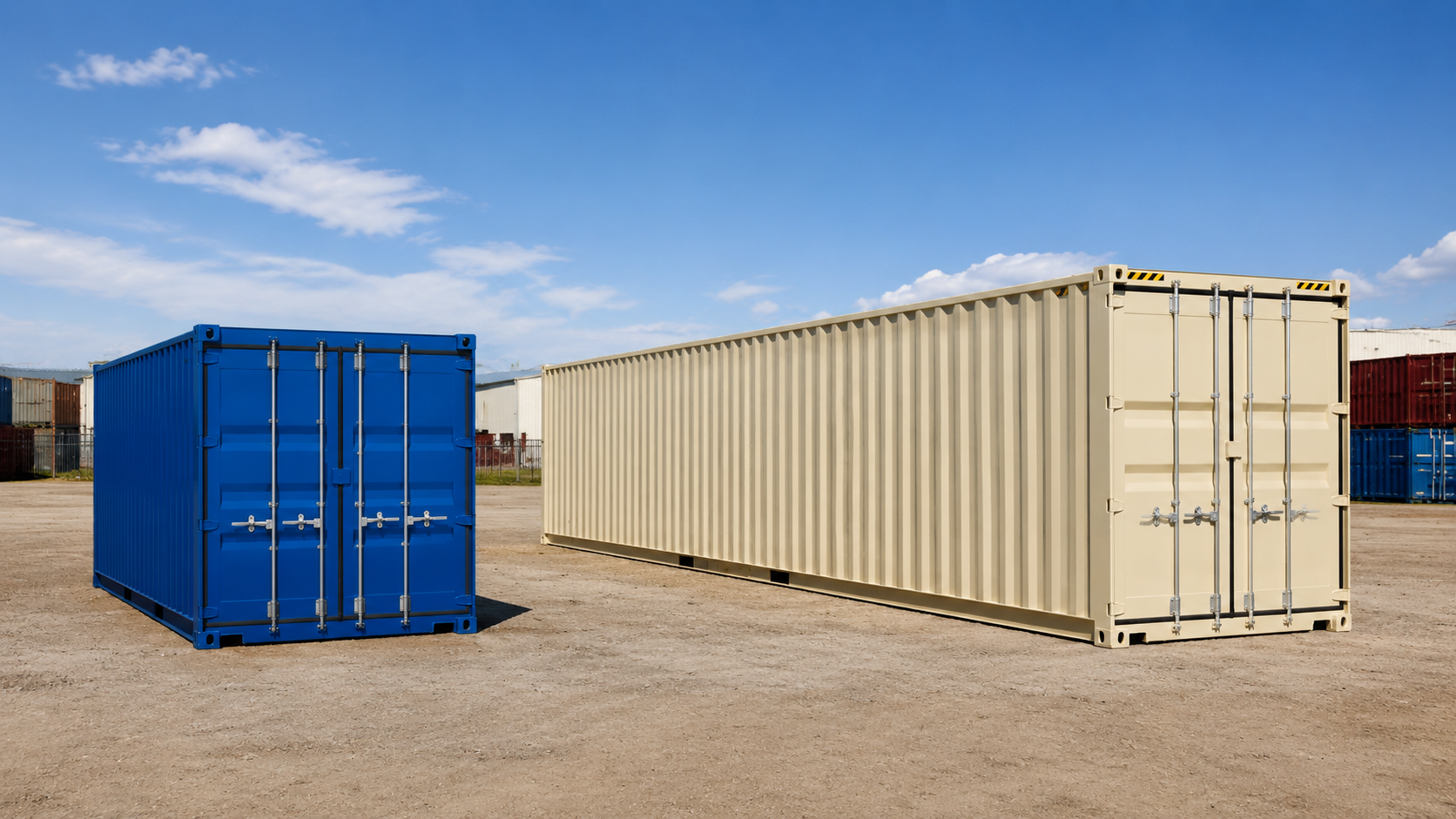
A 40FT unit is twice the nominal length, but payload capacity does not simply double. Confirm the exact unit specifications and plan for aisle space, door clearance and delivery access.
20FT, 40FT and high cube compared
| Feature | 20FT standard | 40FT standard | 40FT high cube |
|---|---|---|---|
| Nominal exterior size | 20′ L × 8′ W × 8′6″ H | 40′ L × 8′ W × 8′6″ H | 40′ L × 8′ W × 9′6″ H |
| Approx. interior volume | 33 m³ / 1,170 cu. ft. | 67 m³ / 2,390 cu. ft. | 76 m³ / 2,690 cu. ft. |
| Best fit | Moderate storage and tighter sites | Large-volume storage and long items | Tall, bulky goods, racking and modifications |
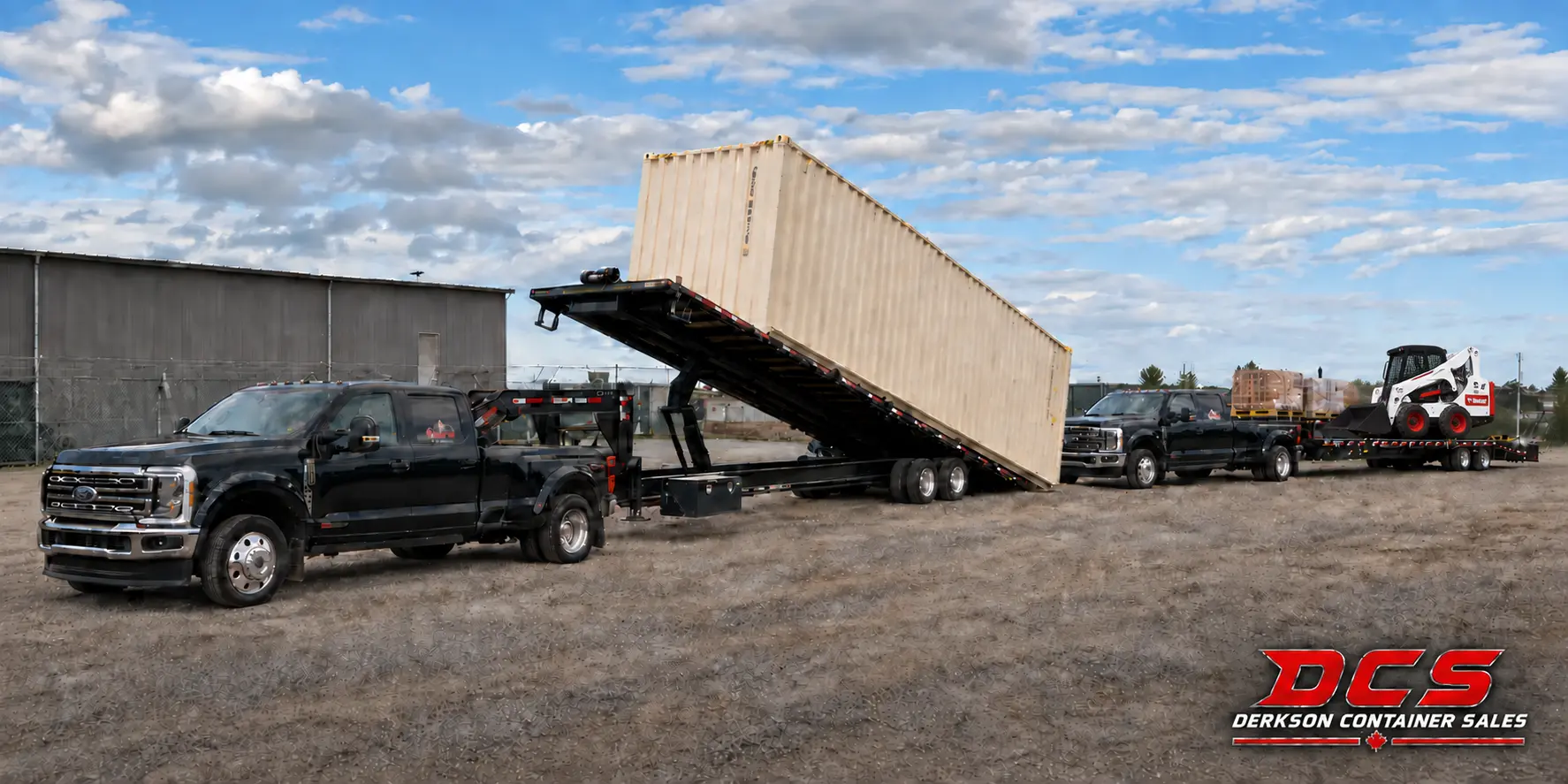
| Typical Derkson roll-off clearance | About 70 ft | About 110 ft | About 110 ft plus overhead clearance |
Published dimensions and capacities are approximate. Door openings, interior measurements, weights and payload vary by manufacturer and exact unit; confirm the listing before planning a load or modification.
20FT standard containers
A 20FT container has an exterior footprint of roughly 20 feet by 8 feet and is commonly about 8 feet 6 inches high. Approximate internal volume is around 33 cubic metres, but the practical advantage for stationary storage is its compact footprint and easier placement.
A 20FT unit is often the better choice when the property has limited approach room, the contents are dense or heavy, or the customer does not need the extra floor area of a 40FT unit.
- Compact footprint
- Useful for tools, seasonal goods and moderate inventory
- Often easier to place on tighter sites
- Requires approximately 70 feet of clear roll-off space in a typical Derkson plan
40FT standard containers
A 40FT unit uses the same approximate width and standard height but doubles the nominal length. Approximate interior volume is around 67 cubic metres—nearly twice the usable volume of a 20FT unit—while its purchase and delivery cost is not necessarily double.
This makes 40FT containers attractive for bulky, lighter goods, furniture, building materials, business inventory and customers who want lower cost per square foot of storage. The trade-off is a larger placement area and approximately 110 feet of straight-line roll-off clearance in a typical Derkson delivery plan.
40FT high cube containers
A 40FT high cube is typically one foot taller than a standard-height container, increasing approximate interior volume to about 76 cubic metres without increasing the ground footprint. That extra vertical space is valuable for tall shelving, bulky equipment, workshops and modification projects.
High cube height must be considered during delivery and placement. Check overhead wires, branches, eaves and the finished door opening—not only the nominal exterior measurement.
- About 9 feet 6 inches exterior height
- Approximately 2,690 cubic feet of interior volume
- Popular for modifications and racking
- Door opening and interior dimensions remain smaller than exterior dimensions
Capacity is more than a volume number
A 40FT container provides close to twice the cubic volume of a 20FT container, but rated payload does not double. Dense contents can reach weight limits before the container is physically full, while bulky lightweight items often benefit from the larger 40FT volume.
For stationary storage, also plan aisles, door swing, shelving depth and room to handle the largest item. A container packed to its theoretical capacity may be difficult to use every day.
- Confirm the exact unit's data plate and specifications
- Keep working aisles and frequently used items accessible
- Discuss unusually heavy loads before delivery
- Do not use general capacity figures as a certified load plan
Specialty configurations
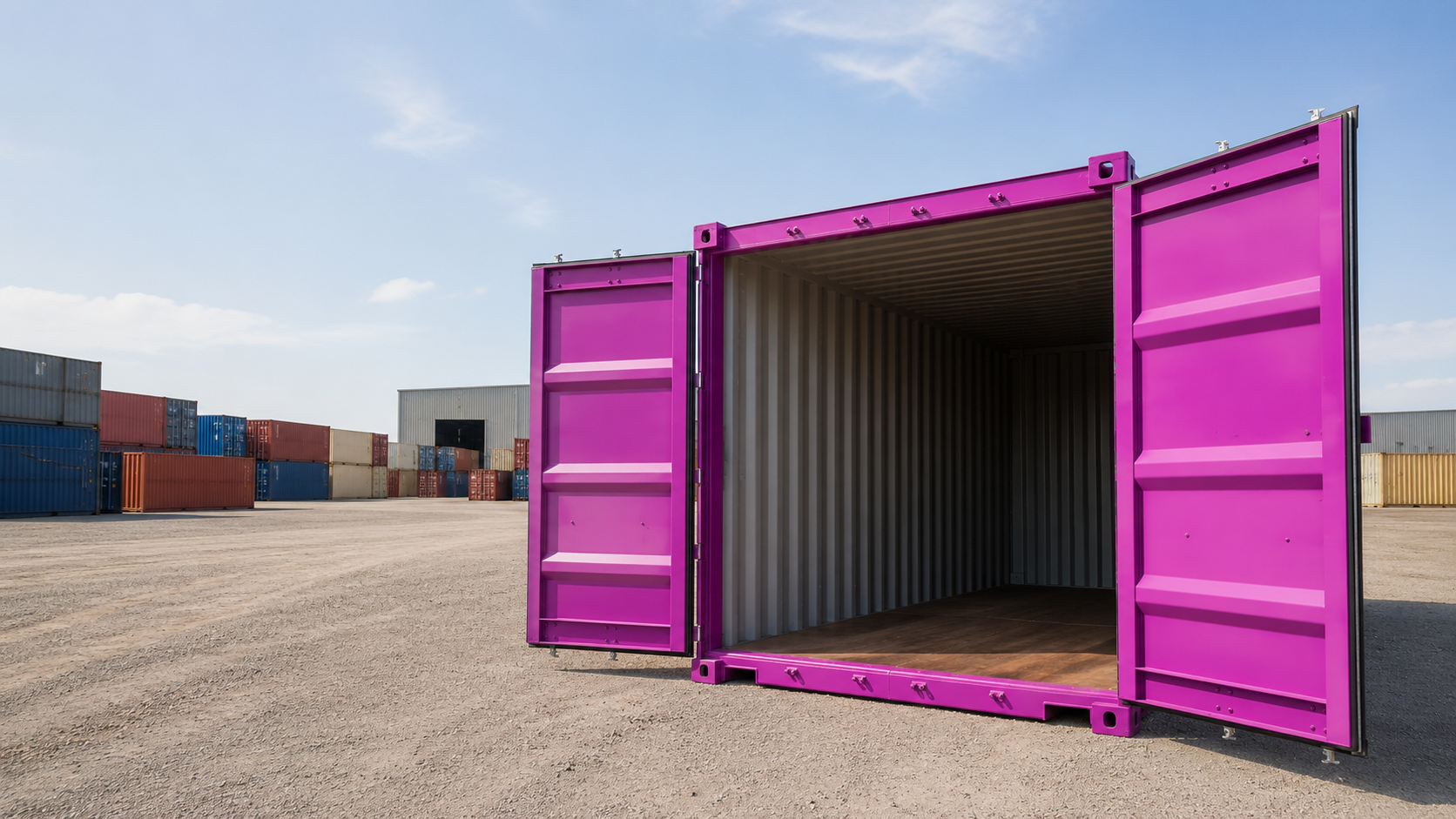
Open-side, double-door and other specialty units change how cargo can be accessed. Confirm that the feature solves a real handling problem and that the site leaves enough space for every door to operate safely.
Helpful answers before you decide
Do exterior dimensions equal usable interior space?+
No. Wall construction, floor, roof and door frames reduce the interior and door-opening dimensions. Always use the listing specifications for planning.
How much delivery space does a 40FT container need?+
Derkson generally plans for about 110 feet of clear straight-line roll-off space, but slope, ground, access and equipment can change the requirement.
Does a 40FT container hold twice as much as a 20FT container?+
It provides nearly twice the internal volume, but usable capacity depends on door access, shelving, aisles, item shape and weight. Maximum payload does not simply double with length.
When is a high cube worth it?+
A high cube is useful when tall shelving, bulky equipment, modification headroom or extra vertical storage matters and the site has adequate overhead and delivery clearance.